If you are a homeowner, you might have noticed some black and red bugs on your trees. These pests are called boxelder bugs, and they can be a nuisance for homeowners. Boxelder bugs also feed on the sap of trees and leaves, which, if left unattended, can cause some minor damage to your trees.
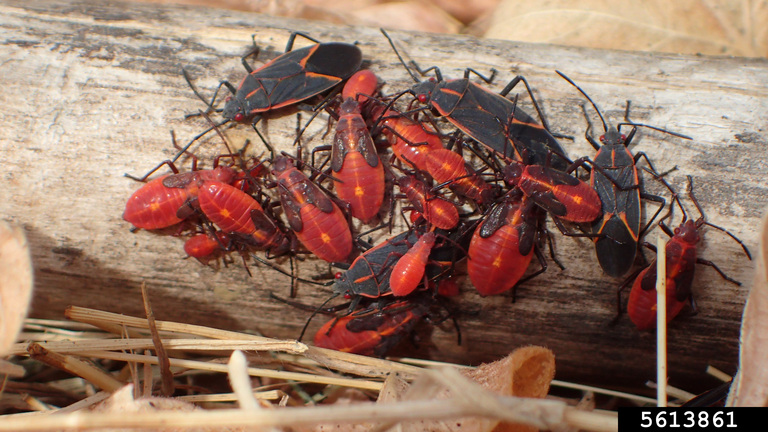
Photo credit: Whitney Cranshaw, Colorado State University, Bugwood.org
Identifying Boxelder Bugs:
Boxelder bugs are approximately 1/2 inch long and, in their adult stage, are primarily black with three bright red lines on their thorax. Adult boxelder bugs have a flattened, elongate shape, while the nymphs are rounder and smaller. They are commonly found on Boxelder, Maple, and Ash trees and can multiply quickly if left unattended. Boxelder bugs are attracted to warm, sunny areas and will typically congregate on the south and west sides of buildings, especially on warm, sunny days.
Getting Rid of Boxelder Bugs:
In addition to feeding on your trees, boxelder bugs have a bad habit of breaking and entering, especially when it’s cool outside. The most effective way to prevent their entry into your home is to seal all possible entry points, cracks, and crevices. Ensure that your windows and doors are appropriately screened and reduce the amount of light around your home by turning off outdoor lights at night. You can also avoid planting boxelder trees near your home, as these trees are a source of food and a breeding ground for boxelder bugs. If you already have an infestation of boxelder bugs, it is best to contact professionals for help.
Natural Remedies:
Because they don’t pose a significant health risk to healthy, mature trees, we often recommend natural remedies to control boxelder bugs on your tree. One popular method is to spray a mixture of water and dish soap on the bugs. The soap will suffocate the bugs, and you can easily wash them away. You can also use neem oil, a natural insecticide, to repel and kill boxelder bugs. Neem oil is safe and will not harm beneficial insects like bees.
Preventing Future Infestations:
To prevent future infestations of boxelder bugs on your tree, ensure that your tree is healthy and well-maintained. Boxelder bugs are attracted to weak and stressed trees, so regular pruning and fertilization can go a long way in preventing infestations. Keep your yard clean and clear of debris, as clutter can attract boxelder bugs. If you have a woodpile near your home, store it away from your home, as it can also be a breeding ground for boxelder bugs.
In conclusion, boxelder bugs can be a serious nuisance but likely won’t harm your healthy trees. We hope that this guide has helped you in identifying and controlling those pesky red bugs on your trees. Remember that prevention is the best cure, so keeping your trees healthy and your yard clean will go a long way in preventing future infestations.